
Designing a HIPAA-compliant mobile experience to improve patient engagement and operational efficiency for Carrolton Regional Medical Center (CRMC).
Role: UX / AI Generalist · Domain: Healthcare · Platform: Mobile
Context
Carrollton Regional Medical Center needed a modern mobile patient portal to support secure access to health information, provider communication, and dependent care.
The existing experience was fragmented across systems, difficult to navigate, and underutilized by patients—resulting in increased support burden and reduced engagement.
My Role
Led end-to-end UX design for the mobile portal
Conducted user research with patients, providers, and administrators
Designed low- and high-fidelity prototypes in Visily.ai and Figma
Applied accessibility and HIPAA compliance best practices
Collaborated with engineering and leadership teams
Research and key Insights
I began by understanding both patient expectations and internal clinical workflows through interviews, surveys, and contextual observation.
Patients struggled to find lab results and appointment details quickly
Older users experienced difficulty with small touch targets and low contrast
Providers wanted fewer patient support calls and clearer message context
Design Strategy
Simplify navigation through clear task grouping
Reduce cognitive load using progressive disclosure
Improve accessibility with larger touch targets and high-contrast UI
Create a single dashboard summarizing key health information
Maintain consistency with CRMC branding and compliance standards
Design Execution
Created low- and high-fidelity mobile prototypes to validate core navigation, task flow, and content prioritization
Designed a dashboard-first experience to surface appointments, test results, messages, and actions in one place
Simplified complex healthcare workflows into clear, task-oriented flows suitable for mobile use
Reduced interaction cost by minimizing taps and avoiding deep navigation hierarchies
Collaborated closely with developers and stakeholders to ensure feasibility and alignment with backend constraints

Wireframes
Click to open a larger image

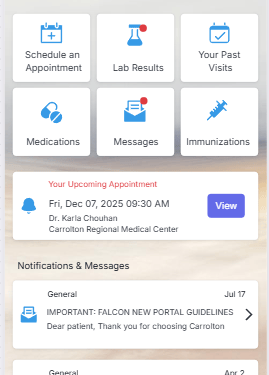
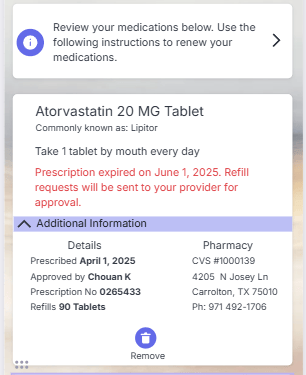
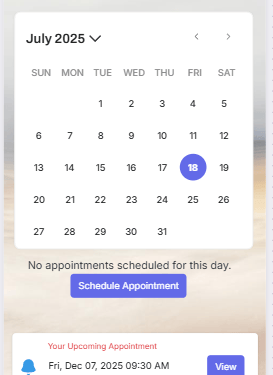
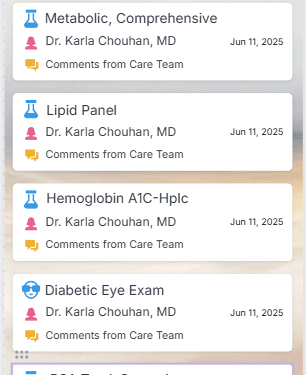
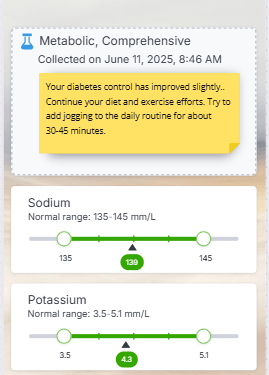
Wireframes focused on simplifying navigation, increasing touch target sizes, and consolidating key patient tasks into a single dashboard.
Outcome
Improved clarity and usability of patient workflows
Reduced navigation related support friction
Increased confidence in accessibility and compliance standards
Established reusable UX patterns for future CRMC applications
Reflection
Designing healthcare experiences requires balancing empathy, clarity, and regulatory constraints. Small usability improvements can significantly impact patient trust and adoption.
Address
Austin
Texas, 78732
Contacts
512-767-869seven
planetpapi69@gmail.com